





Cardiovascular disease rarely begins on the day of a heart attack or stroke.
High blood pressure, atherosclerosis, abnormal cholesterol, diabetes, obesity, metabolic dysfunction and kidney disease can develop silently for years, often without obvious symptoms.
This is why modern preventive cardiology asks a different question.
It is not only:
“Do you have heart disease today?”
It is also:
“What is your cardiovascular risk, what may already be developing silently, and what can we do now to reduce your future risk?”
At Dr Zacharias Kounnis Cardiology Centre in Limassol, this is the principle behind our approach to cardiovascular prevention.
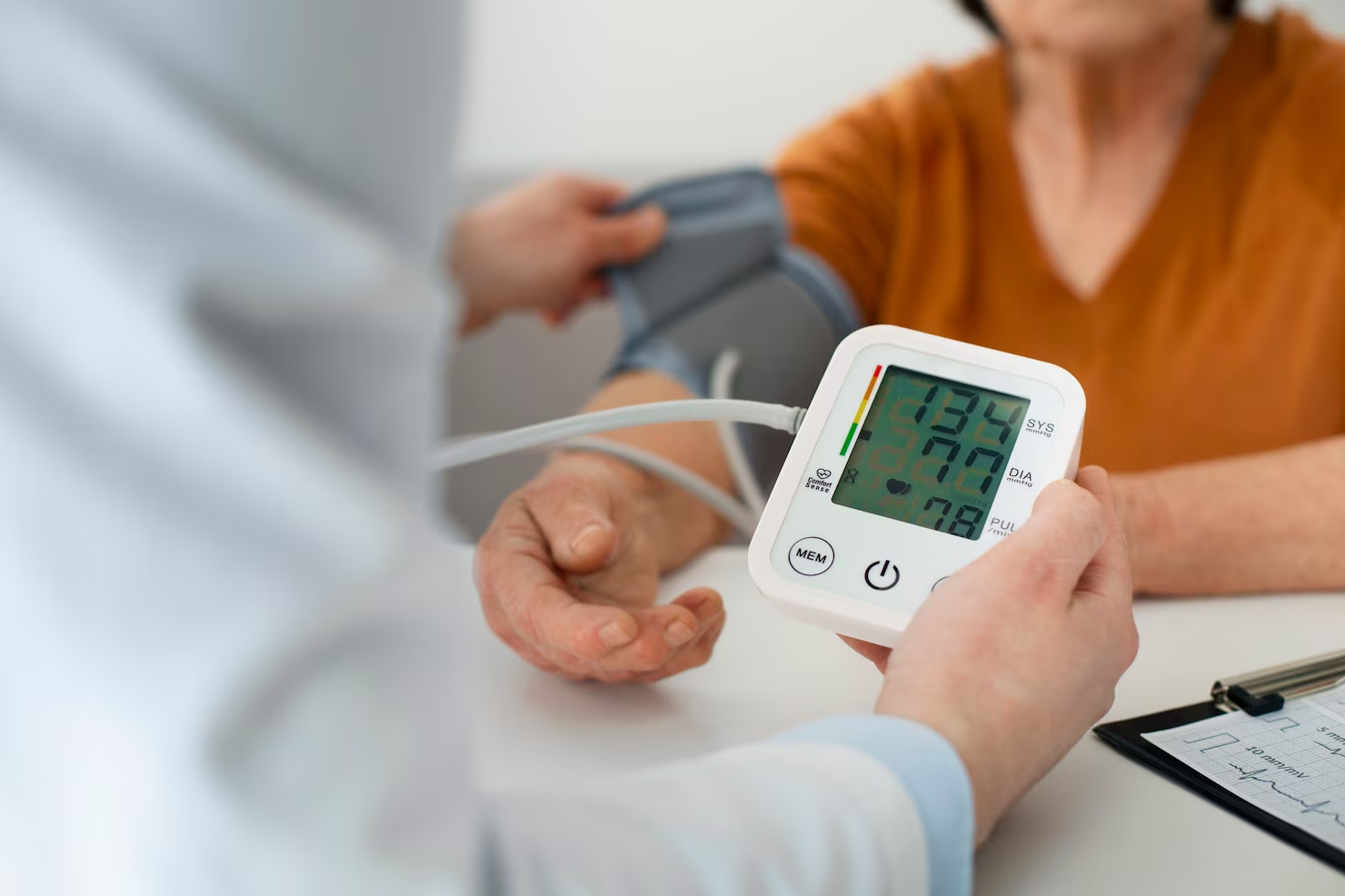
A complete cardiovascular risk assessment does not rely on one blood test, one ECG or one number. It brings together medical history, family history, blood pressure, cholesterol and advanced lipid markers, metabolic and kidney health, cardiovascular imaging, vascular assessment and exercise response when clinically appropriate.
The goal is to build one meaningful picture of the patient's cardiovascular health and use it to guide prevention.
A cardiovascular risk assessment evaluates the factors that may increase a person's likelihood of developing cardiovascular disease in the future.
These may include:
The appropriate assessment is different for every patient.
Not every person requires every available investigation. Tests should be selected according to age, symptoms, medical history, family history and overall cardiovascular risk.
A normal resting ECG can be reassuring, but it cannot answer every preventive question.
An ECG evaluates the electrical activity of the heart at a particular moment. It does not directly tell us whether someone has carotid plaque, peripheral arterial disease, elevated Lipoprotein(a), abnormal ApoB-containing particles, diabetes, kidney dysfunction or decades of accumulated cardiovascular risk.
A person may therefore feel completely well and have a normal ECG while important cardiovascular risk factors remain present.
This is one reason preventive cardiology begins with the whole patient rather than with a single test result.
Family history is an important part of cardiovascular risk assessment.
For example, a person whose parent experienced a heart attack at an unusually young age should not necessarily be assessed in exactly the same way as another person of the same age and with the same LDL cholesterol but without a history of premature cardiovascular disease in the family.
We therefore look beyond isolated laboratory values.
Blood pressure, cholesterol, glucose, weight and other measurements must be interpreted together with family history, lifestyle, existing disease and the patient's overall clinical profile.
LDL cholesterol remains one of the most important modifiable contributors to atherosclerotic cardiovascular disease.
However, modern lipid assessment can go further than a conventional cholesterol panel.
Depending on the patient, evaluation may include:
LDL cholesterol • non-HDL cholesterol • triglycerides • apolipoprotein B (ApoB) • Lipoprotein(a), or Lp(a)
ApoB can help estimate the number of atherogenic lipoprotein particles circulating in the blood.
Lipoprotein(a) is particularly important because its concentration is largely genetically determined. Someone may therefore have an apparently acceptable conventional cholesterol profile while still carrying additional inherited cardiovascular risk.
Contemporary dyslipidaemia guidelines increasingly recognise these markers as useful tools for refining cardiovascular risk in appropriately selected patients.
One of the major changes in modern cardiovascular medicine is the growing recognition that heart disease, metabolic disease and kidney disease are closely interconnected.
High blood pressure, obesity, insulin resistance, type 2 diabetes, abnormal lipid metabolism and chronic kidney disease frequently occur together and can influence cardiovascular risk over time.
A preventive assessment may therefore consider:
fasting glucose • HbA1c • lipid profile • ApoB • Lp(a) • body weight • BMI • waist circumference • creatinine • estimated glomerular filtration rate and other appropriate biomarkers
The objective is not to generate more numbers.
It is to understand how these findings interact.
For selected patients, metabolic evaluation may also include assessment of liver health because metabolic dysfunction-associated steatotic liver disease frequently occurs alongside obesity, insulin resistance, diabetes and abnormal lipid metabolism.
At our centre, abdominal ultrasound and quantitative liver fat assessment may be incorporated into the broader cardiometabolic evaluation when clinically appropriate.
Kidney function is an important component of cardiovascular health.
Chronic kidney disease and cardiovascular disease frequently coexist, and changes in kidney function can influence cardiovascular risk as well as treatment decisions.
Measurements such as creatinine and estimated glomerular filtration rate, or eGFR, should therefore not always be considered simply as isolated “kidney tests.”
In the appropriate clinical context, they form part of the broader cardiovascular risk profile.
This heart-kidney-metabolic connection is now central to contemporary preventive cardiology.
Atherosclerosis is not limited to the arteries of the heart.
It is a systemic arterial disease.
For appropriately selected patients, vascular assessment may therefore provide additional information about cardiovascular health.
Carotid ultrasound can identify plaque or other vascular changes in the arteries supplying the brain.
When clinically appropriate, the finding of previously unrecognised plaque may contribute important information to a patient's overall cardiovascular risk assessment.
The Ankle-Brachial Index, or ABI, compares blood pressure measured in the legs with blood pressure measured in the arms.
It can help identify abnormalities in circulation to the lower extremities and support the assessment of peripheral arterial disease.
Arterial stiffness can also provide information about vascular health.
At Dr Zacharias Kounnis Cardiology Centre, ABI and Pulse Wave Velocity assessment may be incorporated into preventive and cardiometabolic evaluation when appropriate.
These tests are not interpreted in isolation. Their value comes from combining them with the patient's history, examination, laboratory results and other cardiovascular findings.
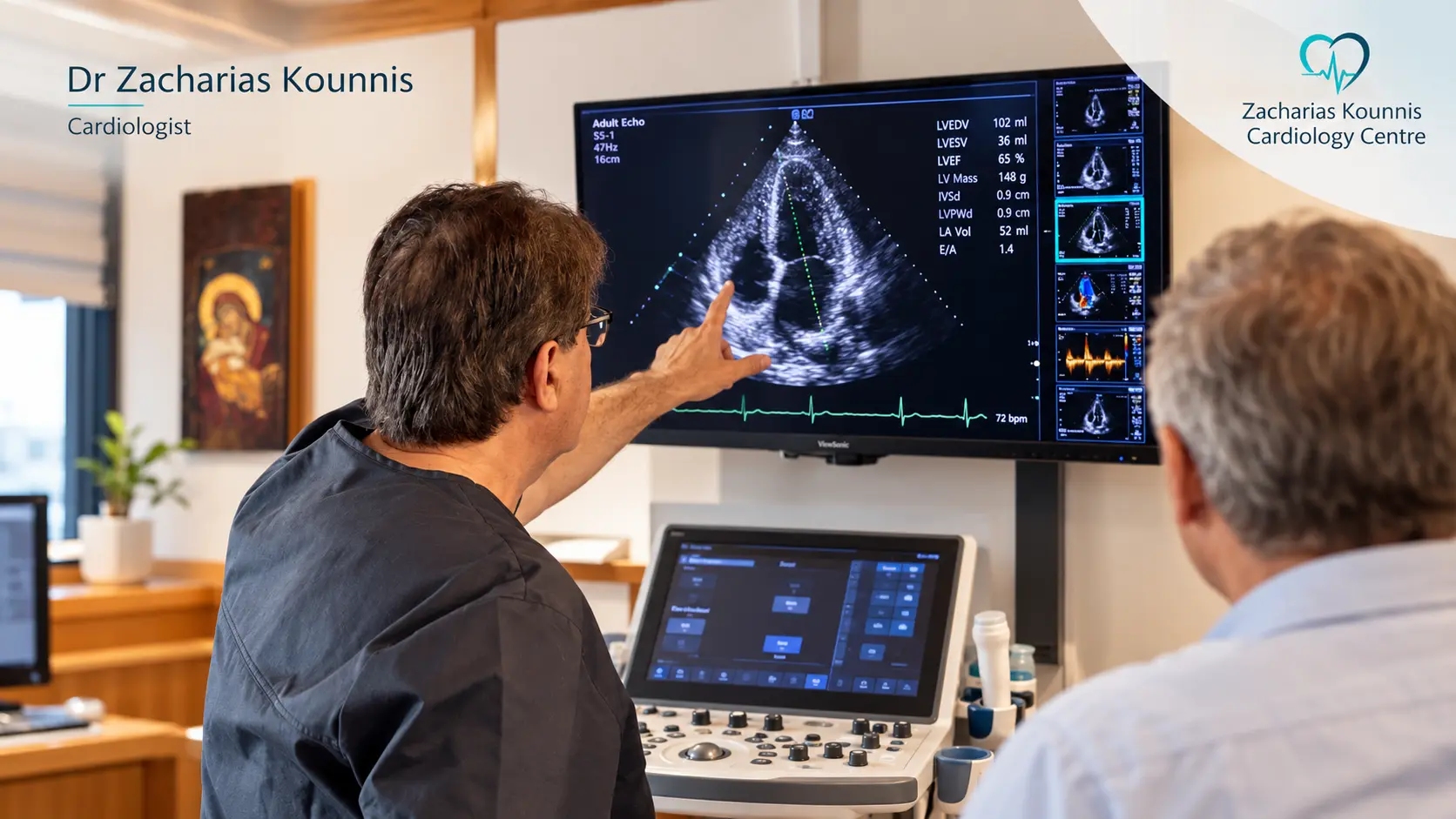
An echocardiogram provides detailed information about the structure and function of the heart.
It can assess:
A normal echocardiogram is reassuring, but prevention should not end there.
Cardiovascular risk involves more than the heart muscle itself. The arteries, metabolism, kidneys, blood pressure, lipid profile and lifestyle all contribute to the broader picture.
The cardiovascular system is designed to respond to physical demand.
For selected patients, exercise testing can therefore provide information that cannot be obtained from a resting examination alone.
During an exercise stress test, we can evaluate factors such as:
When clinically appropriate, echocardiographic imaging before and after exercise may provide additional information about cardiac function and regional wall motion.
The goal is not simply to say that a patient “passed” or “failed” a test.
The more useful question is:
How does this person's cardiovascular system behave when it is challenged?
That information can contribute to a safer and more personalised prevention and exercise strategy.
Cardiovascular risk assessment should always take the patient and the population in which they live into account.
For European patients, contemporary European Society of Cardiology prevention guidance includes tools such as SCORE2 and SCORE2-OP, which estimate cardiovascular risk using factors including age, smoking status, blood pressure and cholesterol.
Cyprus is included within the European cardiovascular risk framework.
Another important development is the American Heart Association's PREVENT™ equations, which incorporate cardiovascular, kidney and metabolic information and can estimate both shorter-term and longer-term cardiovascular risk in eligible adults without established cardiovascular disease.
These tools do not replace clinical judgement.
They support it.
The appropriate risk model and interpretation should be selected according to the individual patient, their clinical circumstances and the relevant guideline framework.
A younger person may have a relatively low estimated short-term cardiovascular risk simply because of age.
But this does not mean that years of exposure to high blood pressure, elevated cholesterol, smoking, obesity or metabolic disease are harmless.
This is why modern preventive cardiology increasingly considers not only:
“What is my risk over the next few years?”
but also:
“Where is my cardiovascular health heading over the next several decades?”
For some patients, long-term risk provides a more useful perspective than short-term risk alone.
It can create an opportunity to intervene earlier, when lifestyle and medical treatment may have many years to influence future cardiovascular health.
A preventive cardiovascular evaluation may be worth discussing with your doctor if you:
Having one of these factors does not necessarily mean that you have cardiovascular disease.
The purpose of assessment is to understand your individual situation rather than assume that every patient carries the same risk.
Calculating cardiovascular risk is not the final objective.
The important step is deciding what to do with that information.
Depending on the individual patient, prevention may involve:
The goal is not to perform the greatest possible number of tests.
It is to obtain the right information for the right patient and convert that information into an appropriate prevention strategy.
A patient may receive several different findings:
“Your echocardiogram is normal.”
“Your cholesterol is slightly high.”
“Your glucose is borderline.”
“Your kidney function needs monitoring.”
“Your carotid ultrasound shows plaque.”
Each result has value.
But they become considerably more meaningful when interpreted together.
At Dr Zacharias Kounnis Cardiology Centre, the findings from the clinical assessment, ECG, cardiovascular imaging, arterial evaluation, metabolic and kidney assessment, laboratory biomarkers, exercise response and cardiovascular risk estimation can be integrated into one prevention profile.
That profile helps us identify priorities and discuss appropriate treatment targets, lifestyle changes, exercise recommendations and follow-up.
A cardiovascular check-up provides a snapshot.
Prevention follows the trajectory.
Blood pressure changes.
Weight changes.
Fitness changes.
Cholesterol changes.
Glucose metabolism changes.
Medications change.
And cardiovascular risk changes as we age.
This is why a high-quality preventive strategy does not necessarily end when the first round of tests is completed.
The purpose is to establish a useful baseline, identify what should change and follow relevant findings over time.
Sometimes success means improving a number.
Sometimes it means demonstrating that disease has remained stable.
And sometimes the most important outcome is an event that never occurs.
Yes. A resting ECG provides useful information about the electrical activity of the heart, but it does not evaluate every cardiovascular risk factor. Blood pressure, cholesterol, family history, diabetes, kidney health, arterial disease and other factors may still influence future risk.
Testing depends on the individual but may include a conventional lipid profile, glucose, HbA1c, kidney-function tests and, where appropriate, ApoB and Lipoprotein(a).
They overlap, but they are not always identical. A heart check-up may focus on current cardiovascular health and diagnostic testing. A cardiovascular risk assessment specifically considers the factors that may influence the probability of future cardiovascular disease and how those risks can be modified.
There is no single age that applies to everybody. Family history, smoking, blood pressure, cholesterol, diabetes, obesity and other medical conditions may justify earlier evaluation. Risk estimation becomes particularly useful as cardiovascular risk factors accumulate with age.
No. Preventive cardiology should be individualised. Tests are selected according to medical history, symptoms, physical examination, family history and the patient's overall cardiovascular risk.
Many important cardiovascular risk factors can be modified. Blood pressure, smoking, cholesterol, diabetes, body weight, physical activity and other factors can often be improved through lifestyle changes, medical treatment or both.
Preventive cardiology is one of the central principles of our cardiovascular practice in Limassol.
Our approach combines clinical assessment with appropriate cardiovascular imaging, vascular evaluation, cardiometabolic assessment, exercise testing, laboratory biomarkers and modern cardiovascular risk estimation.
Not every patient requires every investigation.
The evaluation is individualised according to age, medical history, family history, symptoms, existing disease and overall cardiovascular risk.
Our objective remains simple:
Detect earlier. Understand risk better. Intervene intelligently. Follow over time.
Because the best cardiovascular event is the one that never happens.
Dr Zacharias Kounnis
Cardiology Centre | Limassol, Cyprus
LIVE WITH YOUR HEART.
Medically reviewed by: Dr Zacharias Kounnis, Cardiologist
Last medically reviewed: 3 October 2026
Last updated: 3 October 2026
This article is intended for general educational purposes and does not replace individual medical advice, diagnosis or treatment. Cardiovascular risk assessment and testing should be personalised according to each patient's medical history, symptoms, family history and overall cardiovascular risk.
.png)