





Lipoprotein(a), or Lp(a), is an inherited cholesterol-carrying particle that can increase the risk of atherosclerotic cardiovascular disease and aortic valve stenosis, even when standard cholesterol results appear acceptable. Because high Lp(a) usually causes no symptoms, the only way to know your level is with a blood test.
If heart disease runs in your family or you've never had Lp(a) measured, you can discuss it as part of a preventive cardiology assessment at Dr Zacharias Kounnis Cardiology Centre in Limassol.
Lipoprotein(a), usually written as Lp(a) and pronounced “L-P-little-a,” is a cholesterol-carrying particle in the blood.
It resembles LDL, but it also contains an additional protein called apolipoprotein(a), or apo(a), attached to an ApoB-containing particle.
That additional structure matters.
Elevated Lp(a) is associated with a higher risk of atherosclerotic cardiovascular disease, meaning disease caused by plaque building up within the arteries. Evidence also links elevated Lp(a) with calcific aortic valve stenosis.
The European Atherosclerosis Society guidance on Lipoprotein(a) recognises Lp(a) as an important inherited cardiovascular risk factor.
The practical point for patients is simple:
Your conventional cholesterol result does not automatically tell you your Lp(a).
Someone can therefore have an apparently acceptable LDL cholesterol result and still carry additional inherited cardiovascular risk.
Yes. Lp(a) concentration is determined predominantly by your genes, which makes it different from many cardiovascular risk factors that are strongly influenced by lifestyle.
You did not necessarily develop high Lp(a) because of what you eat.
You cannot assume your Lp(a) is low because you're slim.
You cannot assume it is normal because you exercise.
And because Lp(a) levels tend to remain relatively stable throughout adult life, one measurement is generally enough for most people unless there is a specific clinical reason to repeat it.
This is also why family history of heart disease matters.
A parent who experienced a heart attack at an unusually young age may be telling us something about inherited cardiovascular risk that a routine cholesterol test does not fully explain.

Yes. LDL-C and Lp(a) describe related but different parts of cardiovascular risk.
A standard cholesterol profile commonly includes:
Total cholesterol • LDL-C • HDL-C • triglycerides
Lp(a) normally needs to be measured separately.
This means two patients with similar LDL cholesterol levels may still have different cardiovascular risk if one has markedly elevated Lp(a).
Modern preventive cardiology therefore looks beyond the question:
“Is your cholesterol high?”
The more useful question is:
“What is your complete atherogenic cardiovascular risk?”
For more context, read why cholesterol checks matter for your heart health.

High Lp(a) can contribute to processes involved in arterial plaque and inflammation and is associated with a higher risk of atherosclerotic cardiovascular disease.
This includes conditions such as:
The relationship is not simply “safe” below one number and “dangerous” above it.
Cardiovascular risk generally increases progressively as Lp(a) rises.
Importantly, an elevated Lp(a) result does not mean that cardiovascular disease is inevitable.
Lp(a) is one component of a person's overall cardiovascular risk.
Current cardiovascular guidance considers Lp(a) ≥125 nmol/L or ≥50 mg/dL an important cardiovascular risk-enhancing level.
As a general clinical guide:
Below 75 nmol/L or 30 mg/dL: lower Lp(a)-attributable risk.
75–124 nmol/L or 30–49 mg/dL: intermediate range.
125 nmol/L or 50 mg/dL and above: cardiovascular risk-enhancing level.
250 nmol/L or 100 mg/dL and above: substantially elevated cardiovascular risk.
These ranges help with interpretation, but cardiovascular risk is continuous. A result should always be considered alongside the patient's complete cardiovascular profile.
There is also an important technical point:
mg/dL and nmol/L should not be converted using one universal fixed conversion factor.
The size of apo(a) varies between individuals, meaning mass concentration and particle concentration are not directly interchangeable. Your result should therefore be interpreted using the units reported by the laboratory.
If your Lp(a) is elevated, a complete cardiovascular risk assessment can help put that number into context.
The answer has become much broader.
The 2026 ACC/AHA dyslipidaemia guideline recommends measuring Lp(a) at least once in adulthood to help identify people with increased inherited cardiovascular risk.
Testing may be particularly informative when there is:
Because Lp(a) is largely genetically determined and usually remains stable, repeated measurements are generally unnecessary unless there is a specific clinical reason.
Often, yes.
Because elevated Lp(a) is inherited, a high result may have implications for parents, siblings and children.
When a patient has significantly elevated Lp(a), premature cardiovascular disease or another inherited lipid disorder, testing first-degree relatives may be appropriate.
This is one of the most valuable aspects of recognising inherited cardiovascular risk.
A blood result in one person can sometimes help identify risk within an entire family before disease becomes apparent.
Patients with strongly inherited cholesterol abnormalities may also benefit from reading our guide to familial hypercholesterolaemia.
Usually not substantially.
Unlike LDL cholesterol, blood pressure, glucose or body weight, Lp(a) is mainly genetically determined and is only minimally affected by lifestyle changes.
That does not make lifestyle unimportant.
Quite the opposite.
If someone has inherited one cardiovascular risk factor that cannot easily be changed, it becomes even more important to improve the factors that can be modified:
LDL cholesterol • blood pressure • smoking • diabetes • body weight • physical activity • metabolic health
The correct message is therefore not:
“My Lp(a) is genetic, so there is nothing I can do.”
It is:
“My Lp(a) identifies additional inherited risk, so the rest of my cardiovascular prevention deserves careful attention.”
This is exactly where preventive cardiology becomes valuable.
Because knowing your Lp(a) can change how your overall cardiovascular risk is interpreted.
Imagine two people of the same age with similar LDL cholesterol and blood pressure.
One has low Lp(a).
The other has markedly elevated Lp(a), a father who experienced a heart attack at 49 and evidence of early arterial plaque.
Their preventive strategy should not automatically be identical.
Elevated Lp(a) may influence how carefully other modifiable cardiovascular risk factors are managed.
This is the difference between treating an isolated laboratory number and understanding the patient's cardiovascular risk as a whole.
Statins are not Lp(a)-lowering medicines.
But that does not mean they have no role in somebody with elevated Lp(a).
When a patient's overall cardiovascular risk justifies LDL-lowering treatment, reducing LDL-C remains an important way of addressing a modifiable component of atherosclerotic risk.
Elevated Lp(a) should therefore not discourage appropriate LDL management.
PCSK9-directed therapies are primarily used to reduce LDL cholesterol in appropriately selected patients.
They can also lower Lp(a) to some degree, but they are not currently approved specifically as dedicated Lp(a)-lowering treatment.
Their use should therefore be determined by the patient's complete cardiovascular profile rather than one isolated Lp(a) result.
As of October 2026, there is still no medication approved solely for lowering Lp(a).
Several therapies specifically targeting Lp(a) are being investigated.
One important recent development came from the phase 3 Lp(a)HORIZON trial, which studied pelacarsen in people with elevated Lp(a) and established cardiovascular disease.
The Lp(a)HORIZON trial results reported in September 2026 showed substantial lowering of Lp(a), but the trial did not meet its primary cardiovascular-outcomes endpoint.
This reinforces an important principle:
Lowering a laboratory value is not enough. A treatment must ultimately demonstrate that it improves meaningful cardiovascular outcomes.
Other Lp(a)-targeted therapies remain under investigation, so this area of preventive cardiology continues to evolve.
These measurements are related, but they do not tell us the same thing.
LDL-C estimates how much cholesterol is being carried within LDL particles.
ApoB helps estimate the number of circulating atherogenic particles.
Lp(a) is a genetically determined ApoB-containing lipoprotein that provides additional information about inherited cardiovascular risk.
They are connected, but they are not interchangeable.
For selected patients, considering LDL-C, ApoB and Lp(a) together can provide a more complete cardiovascular picture than looking at total cholesterol alone.
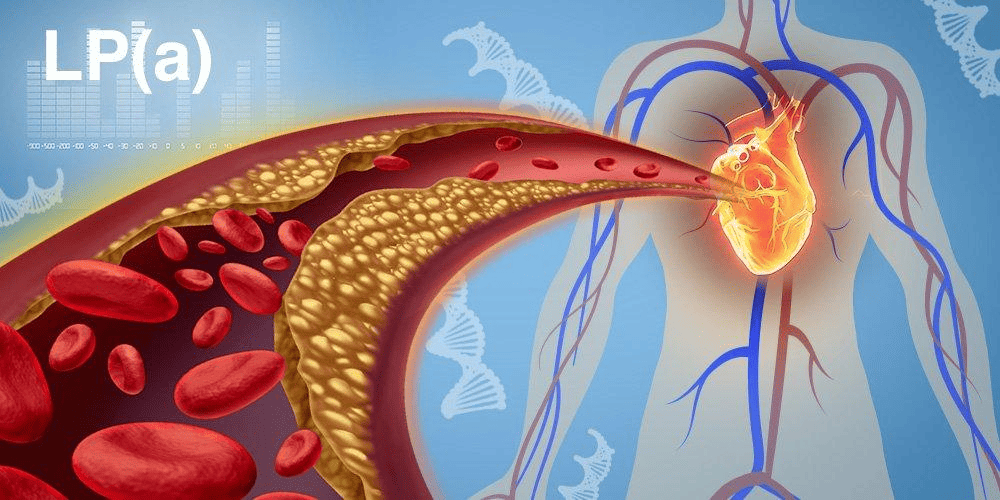
Preventive cardiology aims to identify cardiovascular risk before a heart attack, stroke or another cardiovascular complication occurs.
Lp(a) fits this approach particularly well because it can reveal inherited risk in someone who feels completely healthy, exercises regularly and may even have a normal resting ECG.
At Dr Zacharias Kounnis Cardiology Centre in Limassol, we do not interpret Lp(a) as an isolated laboratory abnormality.
We consider it together with:
When clinically appropriate, cardiovascular imaging and vascular assessment may provide additional information.
That is the philosophy behind the Dr Kounnis Preventive Cardiology programme:
Heart • Arteries • Metabolism • Kidneys • Exercise • Lifetime Risk
We are not interested only in whether today's result is “normal.”
We want to understand where your cardiovascular health is heading.
Consider discussing Lp(a) and cardiovascular prevention with a cardiologist if:
You can also discuss Lp(a) during a preventive cardiovascular assessment even if you feel completely well.
Lp(a) itself usually causes no warning symptoms.
If you develop chest pain, severe shortness of breath, fainting, sudden weakness, facial drooping, difficulty speaking or other symptoms that could indicate a heart attack or stroke, seek emergency medical help immediately. In Cyprus, call 112.
Usually not. High Lp(a) is typically silent, which is why a blood test is required to know your level.
For most adults, one measurement is generally sufficient because Lp(a) is largely genetically determined and usually remains relatively stable. Repeat testing may be appropriate in specific circumstances.
No. LDL-C and Lp(a) are related but different measurements. Lp(a) is a distinct inherited lipoprotein containing an additional apolipoprotein(a) component.
Yes. Lp(a) is not routinely included in a standard lipid profile, so an apparently acceptable LDL or total cholesterol result does not rule out elevated Lp(a).
There is currently no approved treatment intended solely to eliminate elevated Lp(a). Cardiovascular prevention focuses on understanding total risk and optimising the risk factors that can be modified while targeted Lp(a) therapies continue to be studied.
Because Lp(a) is strongly inherited, testing first-degree relatives may be appropriate, particularly when Lp(a) is clearly elevated or premature cardiovascular disease runs in the family.
A single Lp(a) blood test can reveal something a standard cholesterol panel may miss:
Inherited cardiovascular risk that may have been present for years without producing symptoms.
At Dr Zacharias Kounnis Cardiology Centre in Limassol, Cyprus, our approach is not to interpret that number alone.
We look at the patient behind it.
If you would like to understand your Lp(a), cholesterol, family history and overall cardiovascular risk, book a preventive cardiology consultation or call +357 25 389 696.
Detect earlier. Understand risk better. Intervene intelligently. Follow over time.
LIVE WITH YOUR HEART.
By Dr Zacharias Kounnis, Cardiologist
Last updated: 20 October 2026
This article is intended for general educational purposes and does not replace individual medical advice, diagnosis or treatment.
