

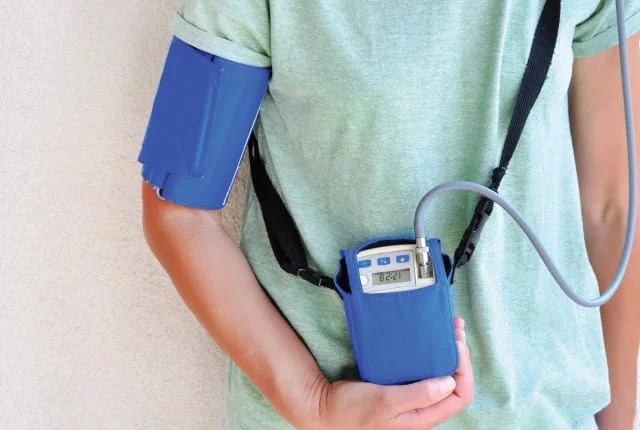
A device that records your blood pressure at regular intervals over a 24-hour period, providing a more accurate picture of your blood pressure levels throughout the day and night. It helps in diagnosing hypertension and assessing the effectiveness of treatment.
24-hour ambulatory blood pressure monitoring (ABPM) measures your blood pressure automatically at regular intervals throughout the day and night while you follow your normal routine. It gives a far more accurate picture of your real blood pressure than a single reading in a clinic. At Cardiology Center Zacharias Kounnis in Limassol, ABPM is used to diagnose high blood pressure, avoid unnecessary treatment and check that treatment is working.
Blood pressure changes constantly with activity, stress, sleep and time of day. A reading taken in a medical setting may be higher than usual because of anxiety (white-coat hypertension), or it may be normal even though blood pressure is high in daily life (masked hypertension). Both situations are common and both can lead to wrong decisions if only clinic readings are used.
The 2024 ESC Guidelines on elevated blood pressure and hypertension emphasise confirming the diagnosis with out-of-office measurements, such as ambulatory or home blood pressure monitoring.
A blood pressure cuff is fitted to your upper arm and connected to a small recorder worn on a belt. The device inflates automatically at set intervals, more often during the day and less often at night. You go about your usual activities and sleep at home as normal. It helps to keep your arm still and relaxed during each measurement and to note your activities, sleep times and any symptoms. After 24 hours you return the device and the readings are analysed.
The report shows your average blood pressure over 24 hours, during the daytime and at night, as well as how much it falls during sleep. According to the ESC guidelines, a 24-hour average of 130/80 mmHg or higher is consistent with hypertension. The ESC's patient guide to blood pressure explains these categories in plain language.
A normal night-time "dip" is a healthy sign. Blood pressure that stays high at night may indicate higher cardiovascular risk or conditions such as sleep apnoea, which can be discussed further during your consultation.
If your blood pressure is raised, Dr Kounnis looks at your overall cardiovascular risk rather than the numbers alone. This may include an echocardiogram to check for effects of high blood pressure on the heart, an ECG, blood tests for cholesterol, glucose and kidney function, and an ABI and pulse wave velocity assessment of arterial stiffness. These form part of our preventive cardiology approach.
For practical information, read our articles Hypertension: What You Need to Know, Hidden Salt in Everyday Foods and Cardiovascular Risk Assessment in Cyprus.
The cuff tightens briefly during each reading, similar to a normal blood pressure check. Night-time readings can be noticeable at first, but most people sleep reasonably well.
Yes, unless your cardiologist advises otherwise. The test is often used to see how well your current treatment works.
No. The device must stay dry, so plan to shower before your appointment.
To arrange an appointment, call +357 25 389696 or contact our cardiology centre in Limassol. Bring any previous reports, test results and a list of your current medicines. If you are unsure which test you need, the team can help you decide before your visit. You can also read more about Dr Zacharias Kounnis and our cardiology centre.
This page provides general information and does not replace a medical consultation. If you have severe chest pain, sudden breathlessness or fainting, call 112 immediately.