

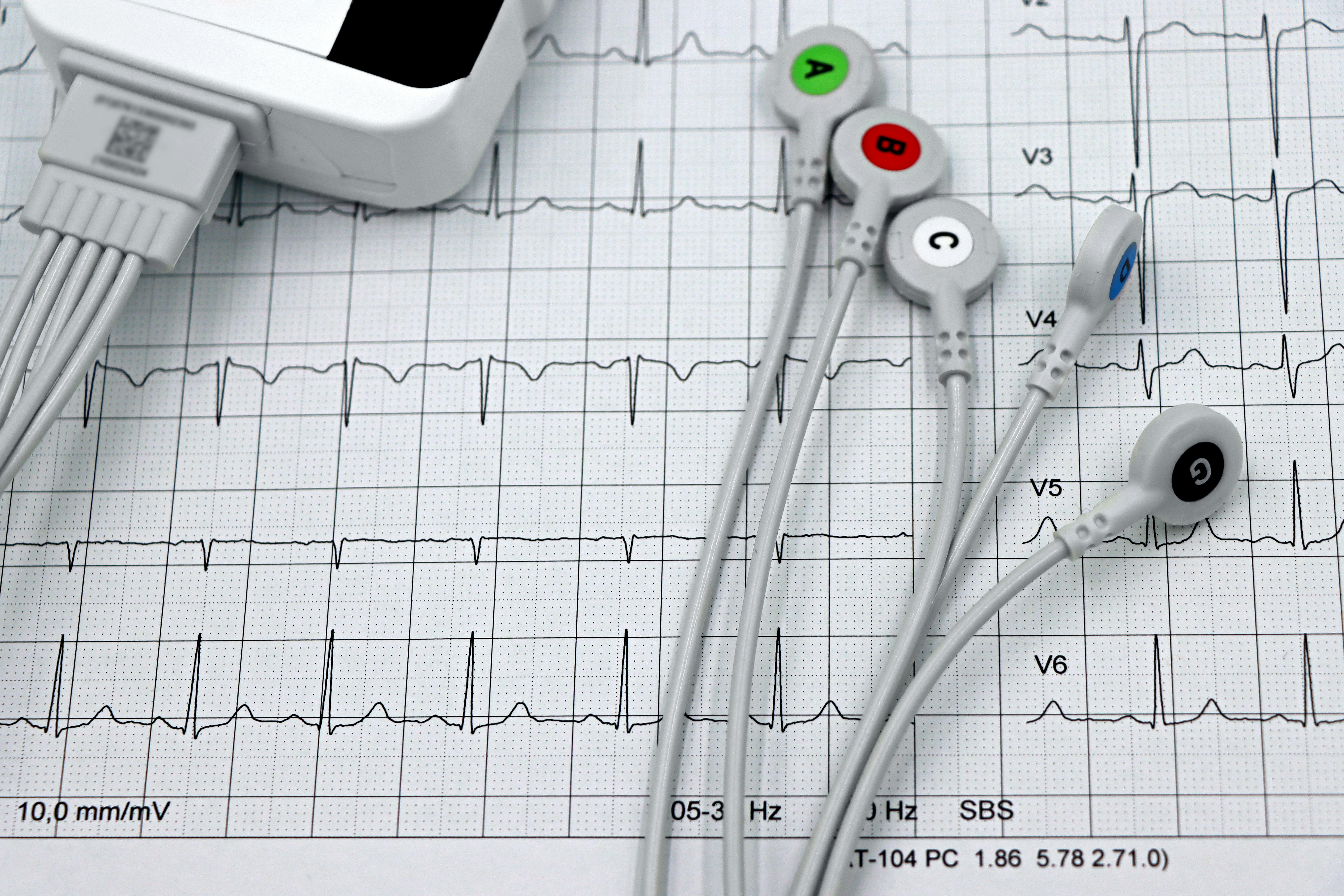
An ECG is a simple, non-invasive test that records the electrical activity of the heart. It is commonly used to diagnose various heart conditions, including arrhythmias, heart attacks, and other irregularities. A two-minute rhythm recording enhances the sensitivity of ECG detection, allowing for a more accurate assessment of transient or intermittent abnormalities.
An electrocardiogram (ECG) records the electrical activity of your heart. It is quick, painless and one of the most important first tests in cardiology. At Cardiology Center Zacharias Kounnis in Limassol, a standard 12-lead ECG is combined with a two-minute rhythm recording, which increases the chance of capturing extra or irregular beats that a few seconds of recording may miss.
A standard ECG captures only about 10 seconds of heart activity. Palpitations and extra beats are often intermittent, so a short trace can look completely normal. Recording the rhythm for two minutes gives a better sample of how your heart behaves at rest. If symptoms come and go over days, a Holter monitor recording over 24 hours or longer may be the next step.
An ECG is usually part of every cardiology consultation and is recommended if you have:
The NHS guide to the ECG gives a helpful overview of when the test is used.
You lie on a couch and small sticky electrodes are placed on your chest, arms and legs. You need to lie still and breathe normally while the recording is made. The test is painless, involves no electricity passing into the body and takes only a few minutes. No preparation is needed, although it helps to avoid body lotion on the chest on the day.
Dr Kounnis reviews the ECG alongside your symptoms and examination. Depending on the findings, additional tests may be recommended:
No. A normal ECG is reassuring, but it shows only the electrical activity at the time of recording. Some conditions, such as narrowed arteries or intermittent arrhythmias, may only appear during exercise or longer monitoring. Read more about heart problems that show no symptoms.
Not necessarily. Some ECG variations are normal in healthy people and athletes. The result must always be interpreted by a cardiologist in context.
Yes. The ECG with rhythm recording is part of our Check Up Plus and our preventive cardiology assessment.
To arrange an appointment, call +357 25 389696 or contact our cardiology centre in Limassol. Bring any previous reports, test results and a list of your current medicines. If you are unsure which test you need, the team can help you decide before your visit. You can also read more about Dr Zacharias Kounnis and our cardiology centre.
This page provides general information and does not replace a medical consultation. If you have severe chest pain, sudden breathlessness or fainting, call 112 immediately.