

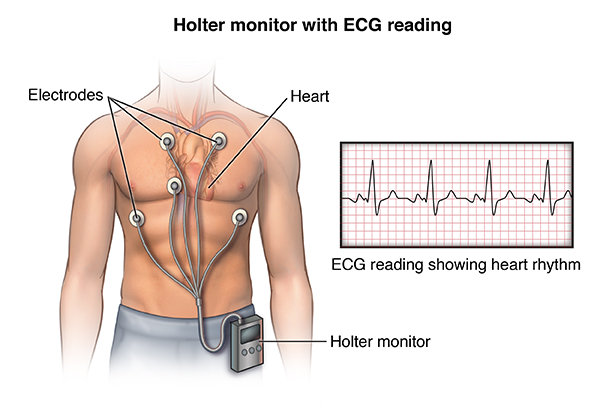
A 24-hour or 48-hour continuous monitoring of your heart’s electrical activity. This test helps detect arrhythmias or abnormal heart rhythms that may not be captured during a standard ECG, particularly if they are intermittent.
A Holter monitor is a small, portable ECG recorder that records every heartbeat continuously, usually for 24 to 48 hours and sometimes longer, while you go about your normal day. It is one of the most useful tests for finding the cause of symptoms that come and go, such as palpitations, dizziness or near-fainting. At Cardiology Center Zacharias Kounnis in Limassol, Holter recordings are analysed and interpreted alongside your symptoms and other test results.
A resting ECG records only a few seconds or minutes of heart activity. If your symptoms do not happen during that time, the ECG can be normal even when a rhythm problem exists. A Holter monitor records over a much longer period, so it is far more likely to capture the heart rhythm at the moment you feel symptoms.
Holter monitoring may be recommended to investigate:
A few small electrodes are placed on your chest and connected to a lightweight recorder that you wear on a belt or strap. Fitting takes only a few minutes and is painless.
You continue your normal daily activities, including work, walking and sleep. Because some symptoms appear only during particular activities, it is helpful to live as normally as possible. You should not shower, bathe or swim while wearing the device.
You will be asked to note the time and nature of any symptoms, such as palpitations, dizziness, chest discomfort or breathlessness. This allows the cardiologist to match what you felt with what your heart was doing at that exact moment, which is the key to an accurate diagnosis.
At the end of the recording you return the device. The full recording is then analysed and the results are discussed with you.
The British Heart Foundation describes Holter monitoring as a continuous recording, usually for 24 to 48 hours, used to help diagnose conditions such as atrial fibrillation and palpitations that do not happen all the time.
If the Holter shows a rhythm problem, an echocardiogram is often recommended to check the structure and function of the heart, and blood tests such as thyroid function may be checked. Treatment, if needed, is discussed as part of our arrhythmia diagnosis and treatment service. If symptoms are very infrequent, a longer recording or other monitoring options may be considered. The BHF's overview of tests for heart rhythm problems explains these options.
Yes. Night-time recording is an important part of the test, as some rhythm problems occur during sleep.
The recording is still valuable, as it can reveal silent rhythm changes. If your usual symptoms did not occur, Dr Kounnis may recommend a longer recording.
No. A Holter records heart rhythm. 24-hour ambulatory blood pressure monitoring measures blood pressure at regular intervals and is a separate test.
To arrange an appointment, call +357 25 389696 or contact our cardiology centre in Limassol. Bring any previous reports, test results and a list of your current medicines. If you are unsure which test you need, the team can help you decide before your visit. You can also read more about Dr Zacharias Kounnis and our cardiology centre.
This page provides general information and does not replace a medical consultation. If you have severe chest pain, sudden breathlessness or fainting, call 112 immediately.