

Medically reviewed by Dr Zacharias Kounnis, Consultant Cardiologist
Heart palpitations, irregular heartbeats and sudden episodes of tachycardia can be frightening. Understanding what your heart is actually doing when symptoms occur is the first step towards accurate diagnosis and appropriate treatment.
Imagine sitting quietly at home when your heart suddenly begins racing. You feel an irregular heartbeat, a fluttering sensation in your chest or the uncomfortable feeling that your heart has skipped a beat.
A few minutes later, everything returns to normal.
When you visit your cardiologist, your electrocardiogram (ECG) may be completely normal.
So what actually happened?
Was it a harmless premature heartbeat, a brief episode of supraventricular tachycardia, atrial fibrillation or simply an increase in your normal heart rate?
This is one of the most important challenges in diagnosing heart rhythm disorders.
We need to understand not only what the patient feels, but also what the heart is actually doing when the symptoms occur.
At Kounnis Zacharias Cardiology Center, this principle is central to our assessment of patients with palpitations and suspected cardiac arrhythmias.
The heart has its own electrical conduction system, which controls the timing and coordination of each heartbeat.
Normally, an electrical impulse begins in the sinoatrial node, the heart's natural pacemaker. It travels through the atria, passes through the atrioventricular node and activates the ventricles through specialised electrical pathways.
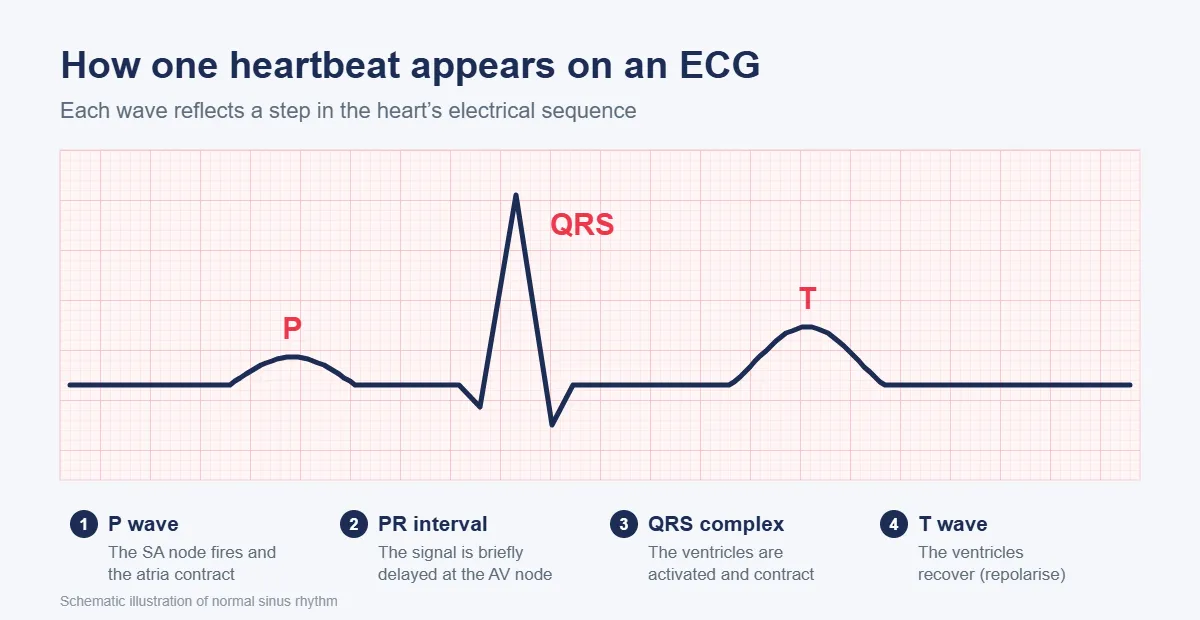
A cardiac arrhythmia occurs when the heartbeat becomes abnormally fast, slow or irregular because of changes in electrical impulse formation or conduction.
Common symptoms include:
Some arrhythmias cause no symptoms and are discovered during routine cardiovascular examinations.
Importantly, not every arrhythmia is dangerous, and not every sensation of palpitations represents an abnormal heart rhythm.
The real clinical challenge is determining what the symptoms mean for each individual patient.
For an overview of the different types of arrhythmia, their causes and treatments, read Arrhythmias: When the Heart Loses Its Rhythm. To find out about an assessment at our centre, see Arrhythmia Diagnosis and Treatment.
One of the most valuable principles in modern arrhythmia investigation is symptom–rhythm correlation.
This means recording the heart's electrical activity at the same time that the patient experiences symptoms.
Consider three examples.
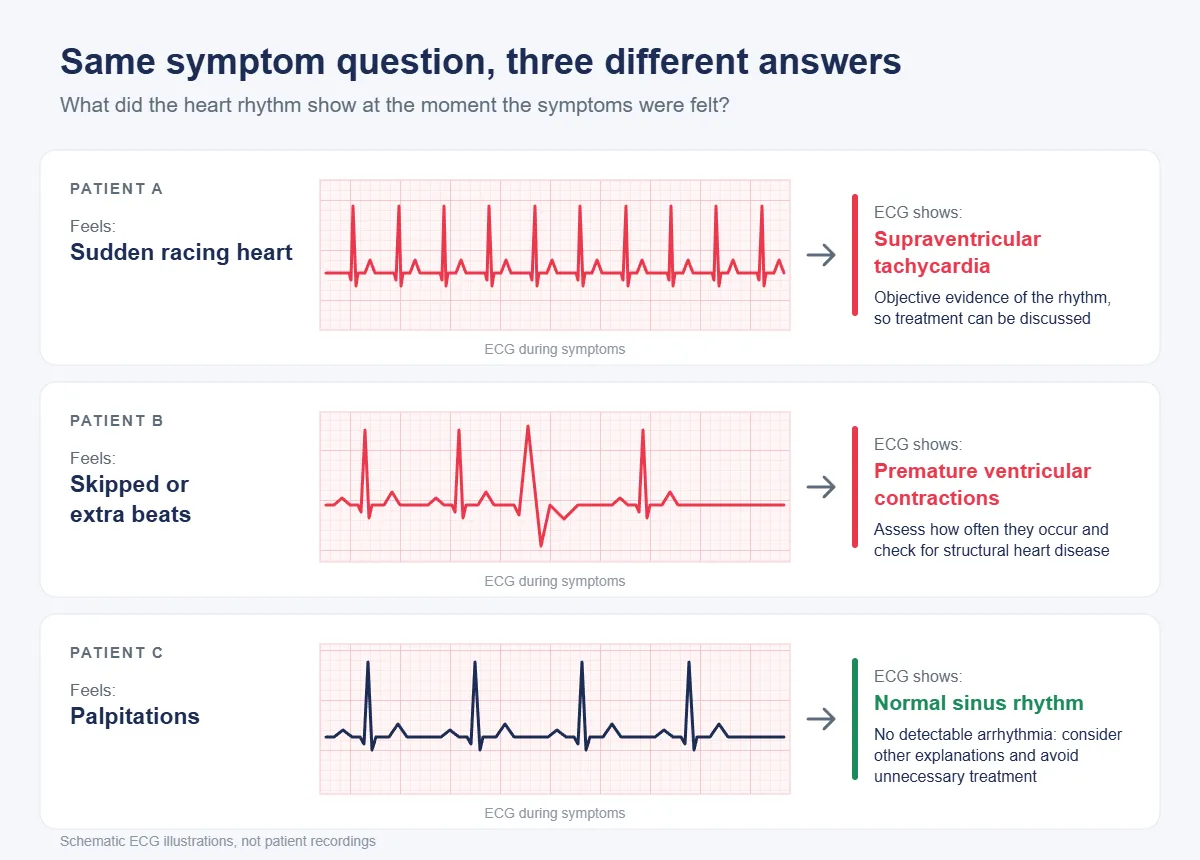
A patient experiences an abrupt episode of racing heart. An ECG recorded during the episode demonstrates supraventricular tachycardia.
We now have objective evidence of the rhythm disturbance, allowing us to discuss appropriate treatment.
A patient frequently feels that the heart is missing beats. ECG monitoring identifies premature ventricular contractions.
We can assess their frequency, investigate whether structural heart disease is present and determine whether reassurance, monitoring or treatment is necessary.
A patient experiences palpitations, but an ECG obtained during the symptoms demonstrates normal sinus rhythm without a significant rhythm disturbance.
This is also valuable information.
It suggests that the recorded symptoms were not associated with a detectable arrhythmia, helping us consider other explanations and potentially avoid unnecessary treatment.
However, a normal recording does not exclude arrhythmias occurring at other times, and its interpretation depends on recording quality and the overall clinical assessment.
The most important question is not simply, "Did you feel palpitations?" but "What rhythm did your heart demonstrate when you felt them?"
A conventional ECG records the heart's electrical activity over a short period.
When symptoms occur intermittently, additional monitoring may be necessary.

At Kounnis Zacharias Cardiology Center, we use 24–48-hour Holter monitoring to record heart rhythm continuously during normal daily activities and sleep.
This examination can help identify atrial or ventricular arrhythmias, assess heart rate patterns, quantify premature beats and correlate symptoms with recorded rhythm abnormalities.
Holter monitoring is also valuable when evaluating selected treatment responses.
However, some patients experience symptoms only once every few days or weeks. In these circumstances, a conventional 24–48-hour recording may not capture the episode.
For selected patients, our centre offers the EMAY portable ECG monitor.
This compact device can be carried in a pocket and used to record an ECG when symptoms occur.
The recording can then be transmitted electronically through a dedicated smartphone application to our Cardiology Center for subsequent medical review.
This offers an important advantage: the opportunity to document the actual heart rhythm during a symptomatic episode, even outside the clinic.
Whether a patient is at home, at work or travelling abroad, an ECG can be recorded and transmitted wherever the necessary internet connectivity is available.
Once reviewed, the recording may help us provide individualised clinical guidance, determine whether additional investigation is required or assess the response to existing treatment.
Portable ECG monitoring complements conventional ECG and Holter investigations. It does not replace comprehensive cardiological assessment or provide continuous emergency surveillance. Medical review and advice depend on the centre's clinical availability.

Heart rhythm symptoms are not only medical events. They may also affect a patient's emotional well-being.
Unpredictable palpitations can cause anxiety, disturbed sleep, fear of exercise or concern about travelling away from medical assistance.
Even patients with benign rhythm disturbances may experience considerable discomfort and uncertainty.
This is why arrhythmia management should include clear explanations, individualised advice and appropriate reassurance.
When patients understand their diagnosis, recognise important warning signs and know how their symptoms will be evaluated, they may feel more confident in everyday life.
Portable ECG technology can contribute to this reassurance by allowing selected patients to document symptoms and communicate recordings to their cardiologist.
Good arrhythmia care is not only about interpreting electrical signals. It is also about listening to the person experiencing them.
Many palpitations and premature heartbeats are benign, particularly in patients without significant underlying heart disease.
Nevertheless, certain symptoms and clinical circumstances require particular attention.
These include unexplained fainting, rhythm disturbances during exertion, documented significant ventricular arrhythmias, impaired cardiac function, known structural heart disease and a family history of premature sudden cardiac death.
Risk assessment helps distinguish patients who can be safely reassured from those requiring further investigation or urgent specialist management.
In patients with coronary artery disease (CAD), rhythm disturbances may require particular consideration.
Myocardial ischaemia, previous myocardial infarction and impaired ventricular function can influence the risk and clinical significance of certain arrhythmias.
The assessment therefore extends beyond the ECG tracing to include the patient's coronary history, symptoms, cardiac function and overall cardiovascular risk.
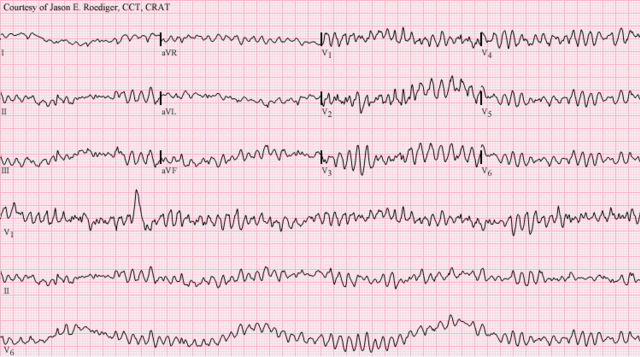
Atrial fibrillation is an important heart rhythm disorder in which the atria demonstrate disorganised electrical activity.
Some patients experience palpitations or breathlessness, while others have no noticeable symptoms.
Assessment includes symptom management, associated cardiovascular conditions, stroke risk and the possible need for anticoagulation.
Treatment may involve heart rate control, rhythm control or specialist intervention.
Even when atrial fibrillation causes few symptoms, appropriate stroke-risk assessment remains essential.
Some patients experience recurrent tachycardia without a primary abnormal cardiac rhythm.
Two conditions worth distinguishing are Postural Orthostatic Tachycardia Syndrome (POTS) and Inappropriate Sinus Tachycardia (IST).
Postural Orthostatic Tachycardia Syndrome (POTS) is associated with excessive heart rate increases on standing and symptoms of orthostatic intolerance, such as dizziness, palpitations and fatigue.
Inappropriate Sinus Tachycardia (IST) involves an inappropriately elevated sinus heart rate, often accompanied by distressing symptoms, after secondary causes have been excluded.
Although both conditions may cause substantial discomfort, their diagnostic evaluation and management differ from those of many conventional cardiac arrhythmias.
Careful assessment of symptoms, heart rate patterns, blood pressure responses and possible underlying causes is essential.
Once a rhythm disturbance has been identified, the next step is to determine the most appropriate management strategy.
Not every patient needs medication.
Depending on the diagnosis and clinical risk, treatment may involve reassurance, monitoring, correction of contributing factors, lifestyle modification, pharmacological treatment or specialist intervention.
In selected patients, electrophysiological assessment or catheter ablation may be recommended. Our centre coordinates referral to appropriately qualified specialists and provides subsequent cardiological follow-up.
Importantly, starting treatment is not the end of the process.
We reassess symptoms, medication tolerance, heart rate behaviour and ECG findings, using repeat Holter or portable ECG recordings when appropriate.
The objective is to establish whether the chosen strategy is effective, safe and suited to the patient's needs.
No. Many palpitations occur in patients without serious heart disease. However, persistent, recurrent or unexplained symptoms should be assessed according to the individual clinical circumstances.
Yes. An intermittent arrhythmia may not occur during a routine ECG recording. Holter or portable ECG monitoring can help document episodes.
A normal rhythm recorded during symptoms is useful clinical information. It may indicate that the symptoms were not associated with a detectable arrhythmia during that recording. It does not mean the symptoms are imaginary.
Selected patients using a suitable portable ECG device can record their heart rhythm and transmit the recording electronically when internet connectivity is available. Medical interpretation and advice follow the centre's established review arrangements.
No. The need for treatment depends on the rhythm diagnosis, associated symptoms, underlying cardiac condition and individual cardiovascular risk.
At Kounnis Zacharias Cardiology Center in Limassol, Cyprus, we approach arrhythmias through a structured process:
Identify the rhythm. Correlate symptoms with ECG findings. Assess the risk. Select appropriate treatment. Evaluate the response. Support the patient.
Modern diagnostic technology is an important part of this process, but it cannot replace clinical judgement, communication and individualised care.
Our objective is to help patients understand their symptoms, avoid unnecessary fear and receive the appropriate level of investigation and treatment.
Sometimes the right decision is medication or further specialist assessment.
Sometimes the most valuable outcome is a clear explanation and reassurance based on a thorough clinical evaluation.
We treat the patient, not simply the ECG.
If you experience recurrent palpitations, episodes of rapid or irregular heartbeat, unexplained dizziness or have been diagnosed with a cardiac arrhythmia, an individualised cardiology assessment can help clarify the cause and guide your care.
At Kounnis Zacharias Cardiology Center, we combine clinical evaluation, 24–48-hour Holter monitoring, portable ECG technology, personalised treatment and structured follow-up.
Understand Your Rhythm. Know Your Risk. Protect Your Heart.
Book Your Cardiology Assessment or call +357 25 389 696.
Kounnis Zacharias Cardiology Center, Limassol, Cyprus
Medical notice: This article is for educational purposes and does not replace individual medical assessment. Palpitations associated with fainting, severe chest pain, marked breathlessness, collapse or other severe symptoms require immediate local emergency medical attention. Do not wait for remote ECG interpretation in an emergency.
