


Medically reviewed by Dr Zacharias Kounnis, Consultant Cardiologist
Living in Limassol means that the sea is part of everyday life. Swimming is an excellent form of aerobic exercise and may be beneficial for many people, including selected patients with stable cardiovascular disease.
However, ordinary recreational swimming is not the same as strenuous open-water swimming, winter swimming or scuba diving. Cold water, waves, currents, heavy diving equipment and changes in pressure place additional demands on the heart and circulation. People with cardiovascular disease, concerning symptoms or important risk factors may therefore require an individual assessment before participating.
Several cardiovascular changes begin as soon as the body enters the water.
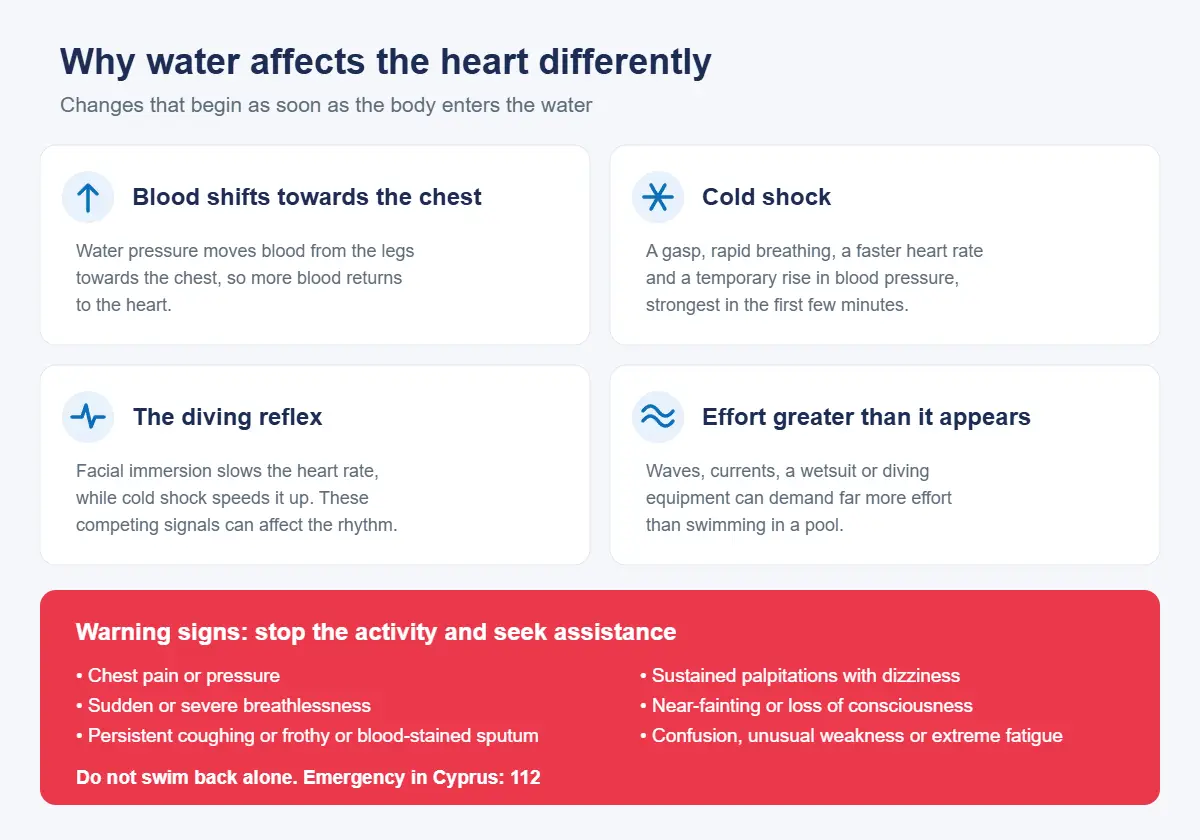
Water pressure moves blood from the legs and peripheral circulation towards the chest. This increases the amount of blood returning to the heart and raises cardiac filling pressures.
Sudden entry into cold water may cause an involuntary gasp, rapid breathing, a faster heart rate and a temporary rise in blood pressure. These effects are usually strongest during the first few minutes.
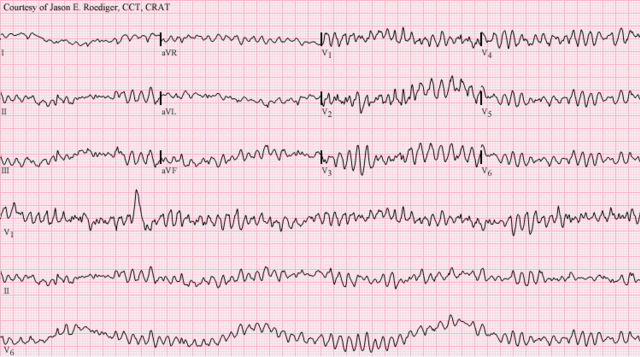
When the face is immersed, the diving reflex tends to slow the heart rate. In cold water, this may occur while the cold-shock response is accelerating the heart. These competing autonomic signals can occasionally promote rhythm disturbances in susceptible individuals.
Swimming against waves or currents, wearing a wetsuit, carrying diving equipment or attempting to return to shore while tired may require substantially more effort than swimming in a pool.
These physiological changes are normally well tolerated. However, in someone with coronary artery disease, uncontrolled hypertension, heart failure or certain rhythm disorders, they may provoke symptoms or a serious cardiovascular event.
A national report presented in 2026 recorded 33 deaths in aquatic environments in Cyprus during 2025: 28 at sea and five in inland waters. People over 70 and foreign visitors were disproportionately represented.
Not every death in the water is caused by heart disease. Nevertheless, a heart attack, dangerous arrhythmia, sudden breathlessness or loss of consciousness can rapidly become fatal when it occurs during swimming or diving.
Most healthy people do not require cardiac testing before ordinary recreational swimming. An assessment is advisable if you:
The assessment should be matched to the individual and the proposed activity. Being considered fit for recreational swimming does not automatically mean that someone is fit for scuba diving.
People with stable, appropriately treated coronary artery disease may often participate in recreational swimming after individual assessment. The recommended intensity depends on symptoms, exercise capacity, ventricular function and overall cardiovascular risk.
Return to scuba diving following coronary stenting or bypass surgery is not automatic.
Only selected, previously established divers who meet formal diving-medicine criteria may be considered. Assessment should confirm:
The final decision should involve both a cardiologist and a physician experienced in diving medicine. Previous diving experience alone does not establish fitness to return.
Palpitations in the water should not be dismissed, particularly when accompanied by dizziness, chest discomfort, breathlessness or near-fainting.
Swimming, particularly strenuous or cold-water swimming, is a recognised trigger for arrhythmias in long QT syndrome type 1 (LQT1). Exercise and adrenergic stress may also provoke dangerous rhythm disturbances in catecholaminergic polymorphic ventricular tachycardia (CPVT).
Patients with either condition require specialist inherited-arrhythmia advice before swimming or diving. They should follow their prescribed treatment carefully and should not make independent decisions about returning to water sports.
An unexplained fainting or near-drowning episode in the water, particularly in a young person, requires thorough investigation before further participation.
Assessment may include:
Read more: Heart Arrhythmias: Why Your Symptoms and ECG Matter.
Immersion pulmonary oedema, called swimming-induced pulmonary oedema when it occurs in swimmers, is an uncommon but potentially life-threatening condition in which fluid accumulates in the lungs during swimming, snorkelling or diving.
Symptoms may include:
Recognised risk factors include:
Stop immediately, signal for help and leave the water safely with assistance. Do not attempt to swim back alone. Call 112.
A suspected episode requires emergency medical assessment, even if the person begins to feel better after leaving the water.
Anyone with a previous suspected or confirmed episode should undergo comprehensive cardiovascular, respiratory and diving-medicine evaluation.
Because recurrence may be fatal, the 2024 joint SPUMS/UKDMC position statement strongly advises against further compressed-gas diving after an episode of immersion pulmonary oedema.
A patent foramen ovale, or PFO, is an opening between the upper chambers of the heart that persists after birth.
A PFO is relevant to certain forms of decompression sickness associated with diving. It is not a reason to investigate ordinary surface swimmers.
In some divers, a significant right-to-left shunt may allow venous gas bubbles to enter the arterial circulation, increasing the risk of cerebral, spinal, inner-ear, cardiovascular or cutaneous decompression sickness.
Routine PFO screening is not recommended for every diver.
Bubble-contrast echocardiography may be considered in selected higher-risk individuals, including those with:
When testing is appropriate, it should be performed by an experienced centre using bubble-contrast transthoracic echocardiography with suitable provocation manoeuvres. The findings and their implications for future diving should be discussed with a physician experienced in diving medicine.
At Kounnis Zacharias Cardiology Center in Limassol, assessment is tailored to the patient’s health, symptoms and intended activity. It may include:
Acute symptoms in the water require emergency care. An outpatient cardiology assessment is not a substitute for emergency evaluation.
Cardiology assessment can support cardiovascular decision-making, but it does not replace formal certification by a physician experienced in diving medicine when this is required.
Stop the activity and seek assistance if you develop:
Signal for help and leave the water safely with assistance. Do not attempt to swim back alone. In an emergency in Cyprus, call 112.
A scuba diver who develops symptoms should terminate the dive and ascend safely with their buddy. An uncontrolled emergency ascent introduces additional serious risks and should be avoided.
Swimming may be an excellent aerobic activity when the cardiovascular condition is stable and exercise advice is individualised. The appropriate intensity depends on symptoms, cardiac function, blood-pressure control and exercise capacity. Cold-water and open-water swimming require additional consideration.
Selected, previously established divers may be considered after complete recovery and formal assessment. Satisfactory ventricular function and exercise capacity, an appropriate haemodynamic response and absence of inducible ischaemia are required. The decision should involve both a cardiologist and a diving-medicine physician.
It is not automatically safe for everyone. Cold shock increases heart rate and blood pressure and may provoke arrhythmias in susceptible individuals. Patients with cardiovascular disease, hypertension, previous fainting or rhythm disorders should seek medical advice before beginning.
No. Routine screening is not recommended. Bubble-contrast testing is reserved for selected higher-risk situations, particularly certain types of decompression sickness or other relevant clinical histories.
A previous suspected or confirmed episode requires comprehensive investigation. Current SPUMS/UKDMC guidance strongly advises against further compressed-gas diving because recurrence may be fatal.
To arrange an individual cardiovascular assessment, contact Kounnis Zacharias Cardiology Center in Limassol on +357 25 389 696.
Medical notice: This article is for educational purposes and does not replace individual medical assessment or formal diving-medical certification. In an emergency in Cyprus, call 112.
